Yes, we carry goat. Three cuts sit in our case: bone in stew meat, whole leg, and shank. If you found this from a search for goat meat near me because the grocery store does not stock it and the specialty market is a forty minute drive, that is the short answer. Goat is the most widely eaten red meat on earth and one of the least understood in an American kitchen, and nearly everything that goes wrong with it goes wrong for the same reason: somebody cooked it like beef.
The Three Cuts of Goat Meat We Keep at the Counter
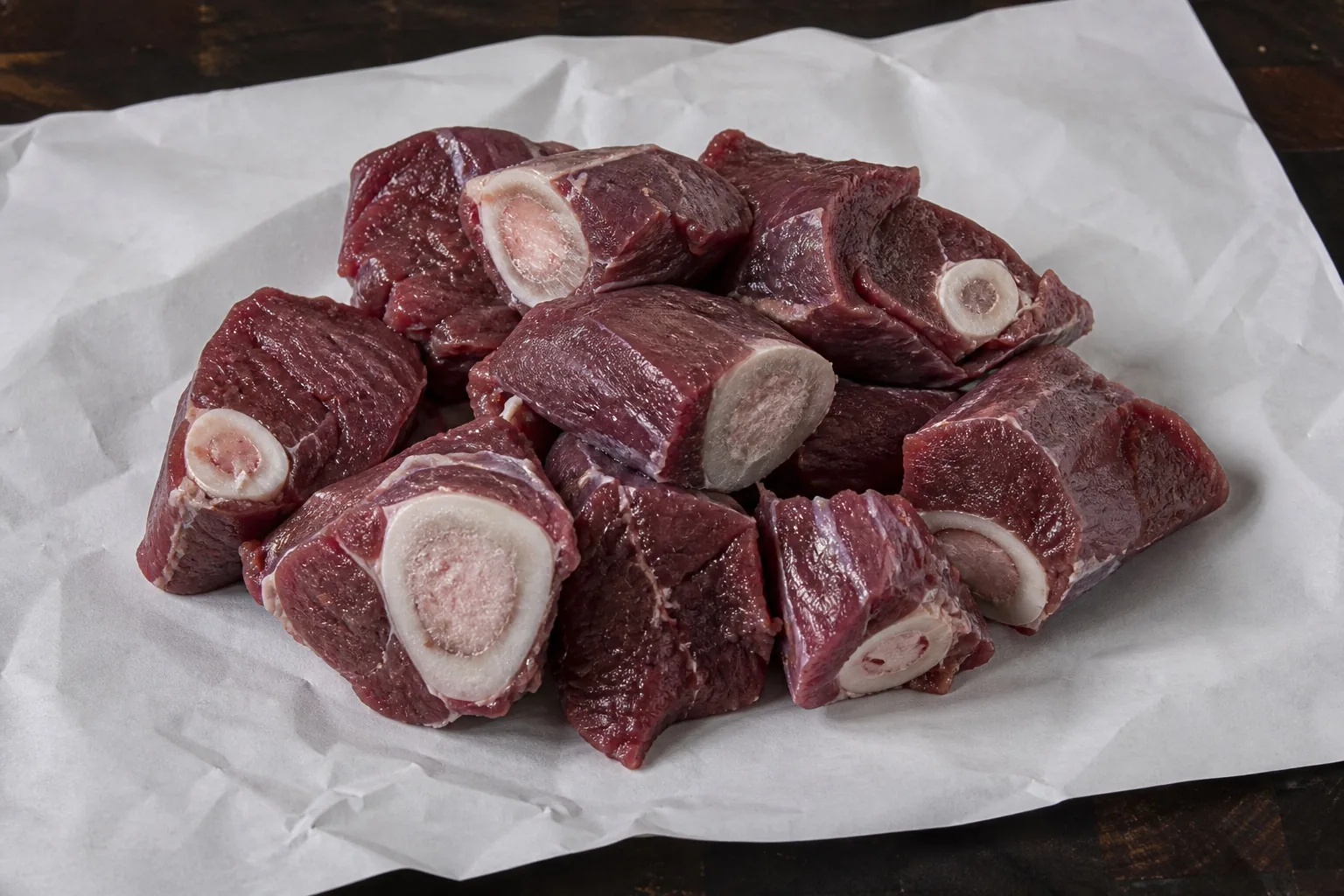
Stew meat is bone in cubes off the shoulder and neck, where the muscle works hardest. It is the workhorse. Curry goat is built on it, so is birria, so is a West African pepper soup or a Jamaican Sunday pot. The bone is not a nuisance in this cut, it is the point. Marrow and collagen come out of it over a long cook and turn thin broth into something that coats a spoon.
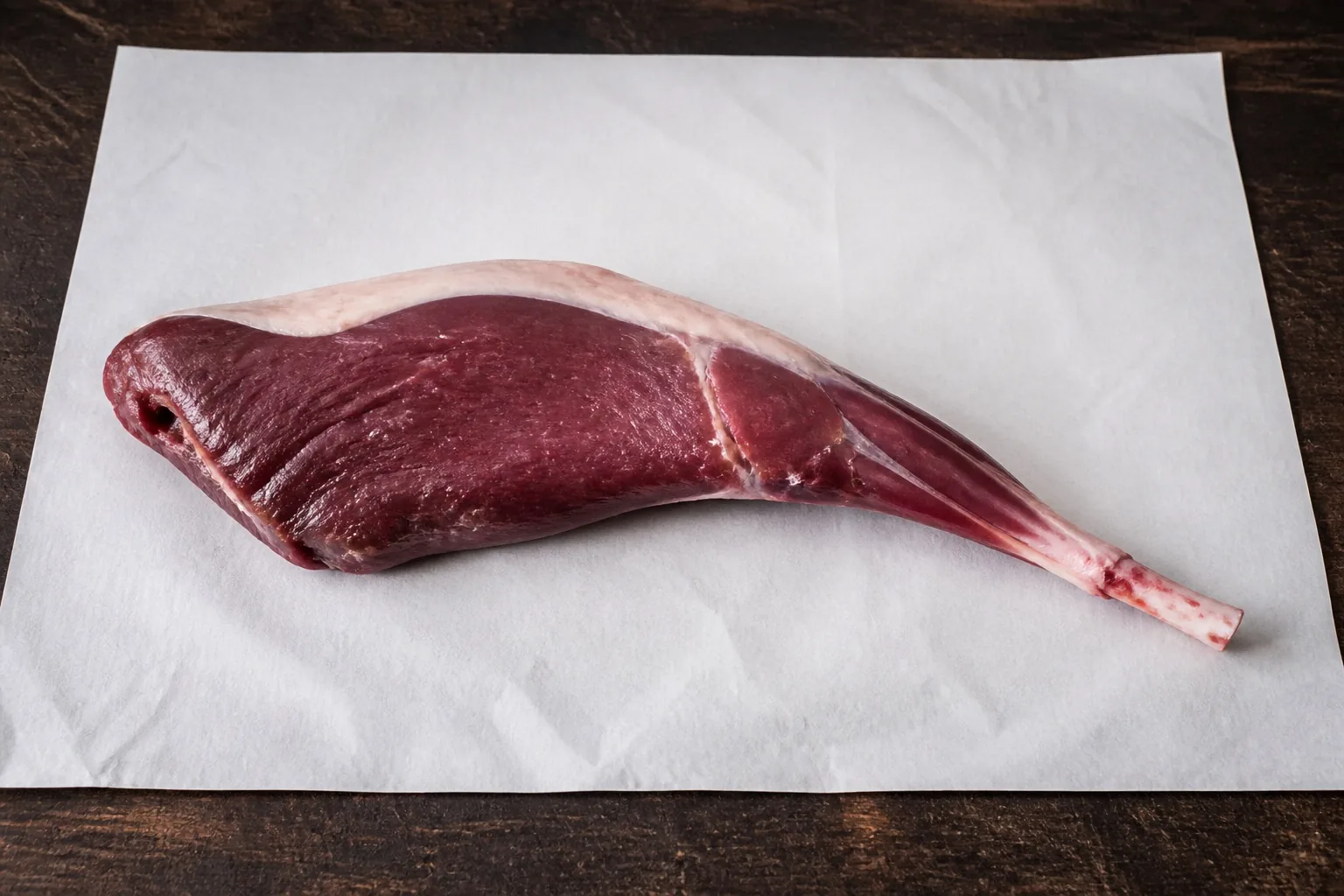
Leg is the roast. Lean, dense, and a good deal smaller than a leg of lamb, which makes it manageable in a home oven. Left whole it slow roasts. Boned out it gives you the cleanest chunks you can get for a stew. Tell us which one you want and we cut accordingly.
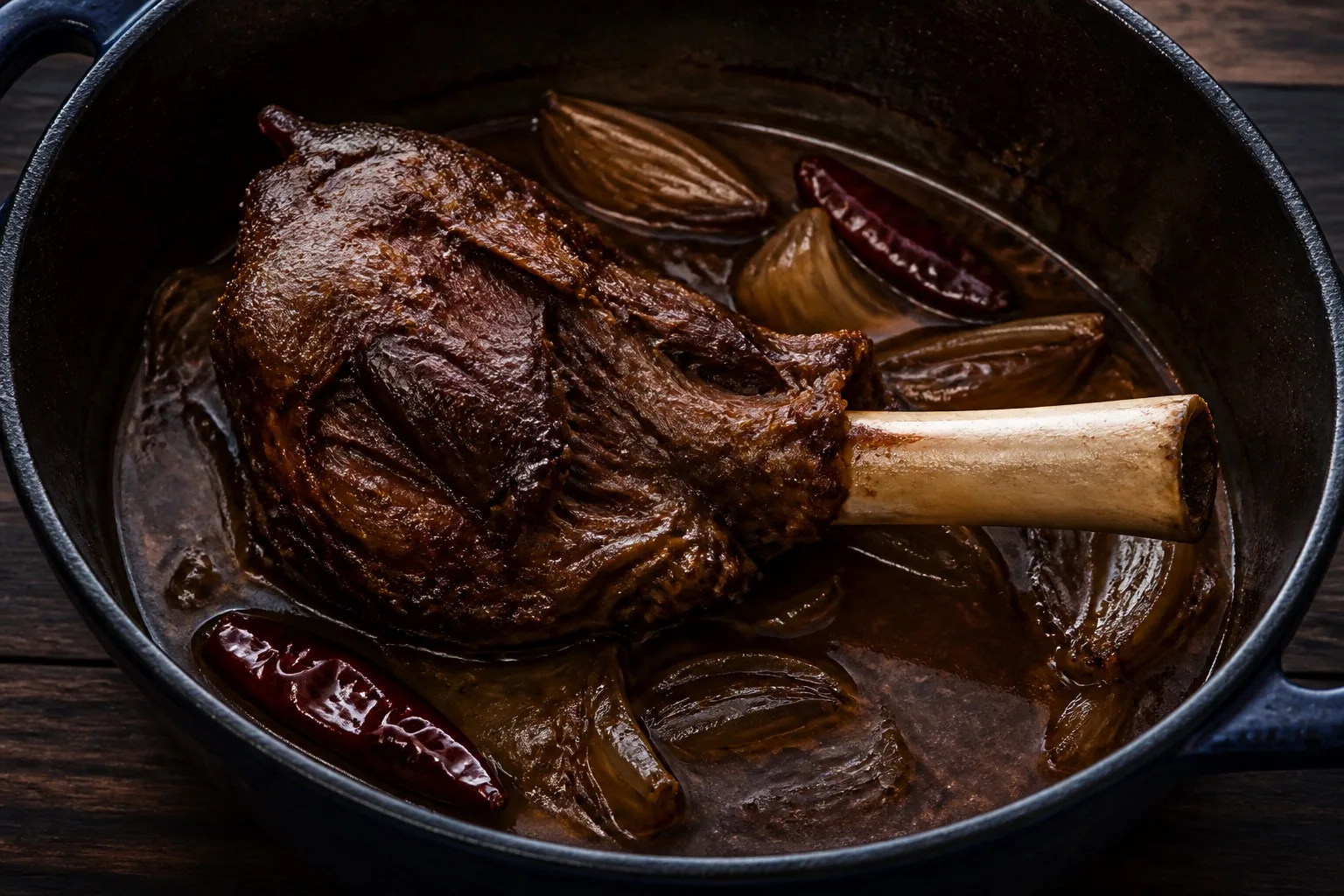
Shank is the leg below the knee, sold cross cut. It holds more connective tissue than anything else on the animal, which sounds like a warning and is closer to a promise. Given time and liquid it goes from tough to falling off the bone and takes the sauce with it. Ask for it cut osso buco style if that is the shape you want.
Goat moves in and out of the case week to week. For a whole leg or a set quantity for a party, call ahead rather than hope. Our notes on custom butcher cuts cover how much notice to give us.
Why Goat Cooks Differently From Lamb or Beef
Goat is lean. Leaner than beef, leaner than lamb. There is fat on it, but it sits in a cap and along the seams rather than marbling through the muscle, and marbling is what buys you forgiveness on a grill. Goat has no such cushion, so dry heat takes it from tender to leathery in about ninety seconds.
What goat has instead is collagen. Collagen is stubborn at low temperatures and turns to gelatin north of 160°F given time, and that one fact writes the whole method. You are not cooking to a temperature and stopping, the way you would with lamb chops. You are holding the meat somewhere hot and wet until the connective tissue gives up.
On flavor: goat is milder than lamb. Faintly sweet, a little mineral, closer to a good beef chuck than to mutton. The barnyard taste people brace for comes from an older animal or from fat gone off, and neither is something we would sell you.
How to Cook Goat
Marinate it overnight. Acid plus aromatics is the pattern in every cuisine that eats a lot of goat: lime and Scotch bonnet in the Caribbean, yogurt and warm spice in South Asia, vinegar and dried chile in Mexico. The acid works the surface while the salt works inward, which is the logic behind our five secrets to perfectly seasoned meat.
Brown it hard before any liquid goes in. Dry the pieces, work in batches, and let each batch take real color. Crowded wet meat steams itself grey, and no amount of simmering afterward puts that flavor back.
Then low and slow. A 300°F to 325°F oven, lid on, liquid partway up the meat and not over it. Stew meat wants two and a half to three and a half hours, shanks three to four, a whole leg four or more. Test with a fork, not a clock: when it gives with no resistance and pulls off the bone in strands, it is done. That is 195°F to 205°F internal, the same neighborhood where a brisket finally turns tender.
What not to do is treat goat like a steak. There is no cut here we would send you home to sear three minutes a side. Live fire still works, but it means a two zone indirect setup with a lid and a couple of hours, closer to our pit master notes than to a weeknight grill.
How to Ask for Goat at the Counter
Tell us the dish. Curry goat, birria and a roast leg are three different asks, and the dish settles the cut and the chunk size faster than any other question.
Say bone in or boneless. Bone in makes the better pot. Boneless makes the easier eating. Both are right, depending on who is at the table.
Say how many people. Goat is sold by the pound, and bone in cuts carry weight you will not eat. Figure three quarters of a pound bone in per person, half a pound boneless, and let us do the arithmetic.
Call ahead for quantity. A few pounds is usually no trouble. Twenty pounds for a cookout needs a day or two of notice.
Where to Buy Goat Meat in Atlanta
Most goat meat near me searches in this city end one of two ways: a grocery chain that does not carry it, or a drive across town to a market that does. Your neighborhood butcher shop should be the easier answer. We are at 2030 Main Street NW in Riverside, open Mon–Fri 11am–7pm, Sat 10am–7pm, Sun 10am–5pm, and the goat comes through the same sourcing standards as everything else behind the glass, which we wrote about in sustainable meat in Atlanta.
You can order online for pickup and put the cut and the chunk size in the notes. Feeding a crowd instead? Our catering menu runs off the same counter. For a whole leg, or a question about what is in this week, get in touch. There is more from behind the counter on the butcher blog.
Frequently Asked Questions
Does Frazie’s sell goat meat?
Yes. We keep bone in goat stew meat, goat leg and goat shank at the counter, sold by the pound. Availability moves week to week, so call ahead for a whole leg or a large quantity.
What does goat meat taste like?
Milder than lamb. Faintly sweet, a little mineral, closer to a good beef chuck than to mutton. The strong flavor people brace for comes from an older animal or from fat past its best.
What is the best cut of goat for curry?
Bone in stew meat from the shoulder and neck. The bone and the connective tissue give curry goat its body, and the cut takes two or three hours of simmering without falling into threads.
How long does goat meat take to cook?
Longer than lamb. Covered at 300°F to 325°F, stew meat runs two and a half to three and a half hours, shanks three to four, and a whole leg four or more. Judge it by fork tenderness, not by the clock.