
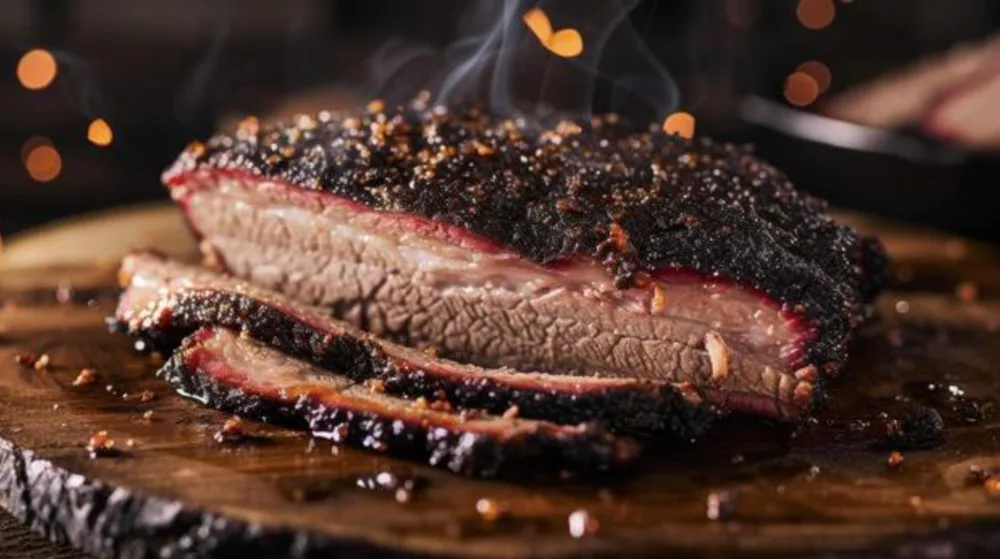
Brisket has a reputation for being difficult, and that reputation is only half earned. It is not a hard cut to cook. It is a slow one, and it punishes guessing. Get the right piece of beef, trim it properly, hold a steady temperature for most of a day and let it rest, and you will pull something off the smoker people talk about for weeks.
What Brisket Is, and Why It Takes So Long
Brisket comes from the lower chest of the steer. Cattle have no collarbone, so that muscle group carries a large share of the animal's weight and works constantly. Muscles that work hard build connective tissue, and brisket is full of it.

That connective tissue is collagen, and collagen is the whole story. Cooked fast, it stays tough and eats like leather. Held at a low temperature for hours, it breaks down into gelatin, which coats the muscle fibers and gives good brisket its rich, slick texture.
The Flat, the Point, and the Whole Packer
A whole brisket, what most people call a packer, is two muscles stacked on one another with a seam of fat between them, and knowing which one you are buying changes how you cook it.
The flat is the lean one, the long rectangular muscle that gives you neat slices with a visible smoke ring. It is also the less forgiving, with little fat to cover a mistake. The point sits on top at the thick end, fattier and more marbled, much kinder to beginners, and it is where burnt ends come from.
A whole packer runs 12 to 18 pounds untrimmed and gives you both. If this is your first brisket, ask for a flat of five or six pounds instead. We cut to order at our butcher counter, and our guide to custom butcher cuts covers how to ask for what you need.
What to Look For at the Counter
Two briskets of the same weight can cook very differently. Check four things.

- Flexibility. Pick it up by one end. A good one bends and drapes over your hand. A stiff board of a brisket means a thin flat that will dry out on you.
- An even flat. It should be close to the same thickness end to end. One that tapers to a thin edge overcooks there long before the thick end is ready.
- Marbling. Look at the exposed face of the flat for flecks of fat inside the muscle. Upper choice grades and Certified Angus Beef carry more, and on a cut this lean it makes a real difference.
- A workable fat cap. You want fat on one side, but not an inch of it. Anything thicker than you plan to leave on is weight you pay for and then cut off.
Ask us to turn it over and show you both sides. That is what the counter is for.
Trim It Before You Season It
Trimming is the step most home cooks skip, and it separates a good brisket from a great one. Work with cold beef straight from the refrigerator and a sharp, flexible boning knife. A cold brisket trims cleanly, while one that has sat out goes soft and the knife wanders.
Bring the fat cap down to about a quarter of an inch across the whole surface. Fat does not soak into meat, so leaving more on will not make the brisket juicier. It only blocks smoke and seasoning from reaching the beef. Then cut out most of the hard, waxy deckle fat in the seam between the point and the flat. It never renders at smoking temperatures, and a slice with a white band through the middle is a slice nobody finishes.
If an hour with a knife and fifteen pounds of beef is not your idea of a good afternoon, bring it to us. Trimming to spec is ordinary work at our counter.
Rub, Smoke, and the Long Middle
Central Texas settled the seasoning argument years ago: coarse salt and coarse black pepper in equal parts, and nothing else. Beef this good does not need a fourteen ingredient rub over it. Season every surface generously, and if you can do it the night before and leave the brisket uncovered in the refrigerator, the surface dries and takes smoke better.
Temperature, Wood, and the Stall
Run your smoker between 225 and 275°F and hold it there. Post oak is the Texas standard, hickory is bolder, pecan sits between them and fruit woods are milder. Plan on about an hour per pound, but treat that as a way to decide when to wake up, not a finish line. Our pit master secrets to perfect BBQ goes deeper on fire management.
Somewhere around 150 to 170°F internal, the temperature will stop climbing and sit still for hours. This is the stall, and nothing has gone wrong: moisture evaporating off the surface cools the meat as fast as the fire heats it. Wait it out for the darkest bark, or wrap: butcher paper keeps the bark firm, foil is faster and softens it.
Knowing When It Is Done
Brisket is done by feel, though the thermometer gets you close. Start checking around 195°F and expect to finish between 200 and 205°F. Slide a probe into the thickest part of the flat. When it goes in and out with almost no resistance, the way it would into soft butter, the collagen has rendered. If it drags, close the lid for another half hour.
Rest It, Then Slice It Properly
Slicing a brisket the moment it comes off the smoker wastes twelve hours of work. Wrap it in a towel, set it in a dry cooler with the lid closed and leave it two to four hours. The juices settle back into the muscle instead of running onto your board, and it stays hot well past dinner time, which makes timing the cook far less nerve-racking.

Then slice against the grain, always. The grain in the point runs at close to a right angle to the grain in the flat, so one line of cuts across a packer gets one of them wrong. Separate the two at the fat seam first, then slice each on its own terms. Cut the flat about as thick as a pencil. The point can go thicker, or into cubes tossed with sauce and put back on the heat for burnt ends. Leftovers chop well for sandwiches, and our notes on storing meat properly keep them worth eating.
Where to Buy Brisket in Atlanta
You can buy brisket almost anywhere in Atlanta. Finding one with an even flat, honest marbling and a fat cap trimmed by somebody paying attention is a different errand. Come see us at 2030 Main Street NW in Riverside, tell the counter what you are cooking and how many you are feeding, and we will cut it to suit. We are open Mon–Fri 11am–7pm, Sat 10am–7pm, Sun 10am–5pm.
If you are feeding a crowd and would rather not run a smoker overnight, our catering menu takes the cooking off your hands. Questions about a cut or an order for a party are always welcome, so get in touch or call the shop. For more from behind the counter, including mastering the art of BBQ, keep reading the butcher blog.
Frequently Asked Questions
How long does it take to smoke a brisket?
Plan on about an hour per pound at 250°F, so a 14 pound packer runs 14 to 18 hours including the rest. Cook to tenderness, not the clock: two briskets of the same weight can finish hours apart.
What is the difference between the flat and the point?
The flat is the lean, even muscle that gives tidy slices. The point is the fattier, more marbled muscle stacked on top, and it is what burnt ends are made from. A packer holds both, separated by a seam of hard fat.
How much brisket should I buy per person?
Figure a pound of untrimmed brisket per person. Trimming and the long cook take about half the raw weight, so a pound on the smoker lands near a half pound on the plate.
Should I wrap brisket in foil or butcher paper?
Butcher paper breathes, pushing through the stall while keeping the bark firm. Foil traps steam, moves faster and softens the bark. Use paper for texture, foil if you are short on time.
Can Frazie's trim a brisket for me?
Yes. Tell us at the butcher counter how you plan to cook it and we will trim the fat cap and deckle to suit, or cut a packer down to just the flat if that is the size you need.
Do I need to inject or brine a brisket?
Not for a well-marbled brisket cooked properly. Injections are a competition habit, insurance on lean beef. Choose a good piece, trim it, hold a steady temperature and rest it, and it will be juicy on its own.