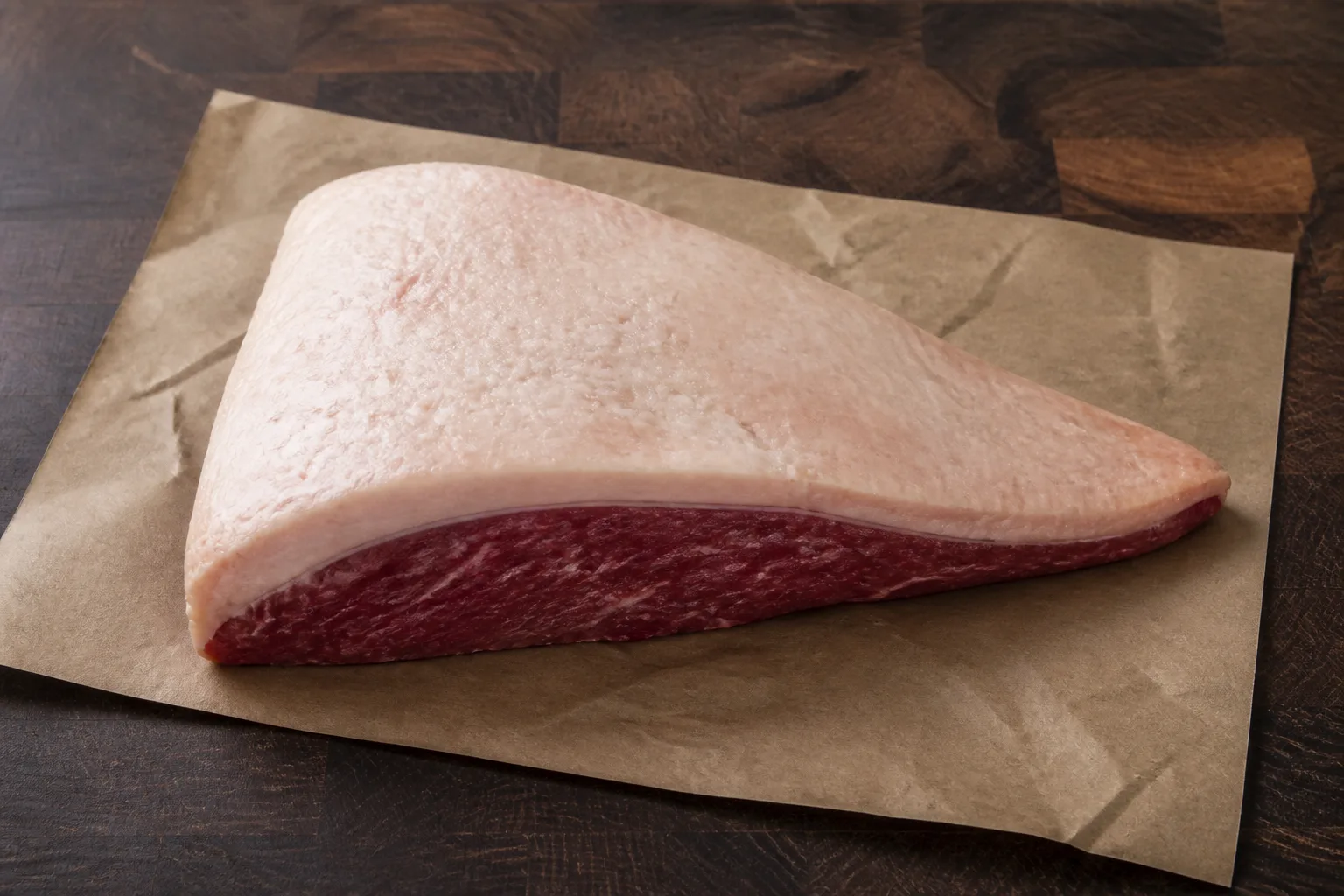
Picanha is the top sirloin cap, the triangular muscle sitting over the rump with a thick lid of fat still attached. It is the cut a Brazilian steakhouse builds its whole rodizio around, and it is one of the easiest good steaks to cook badly, almost always because somebody trimmed the fat off it first. We cut it at the counter at $18.99 a pound. A whole one runs two to three pounds, feeds four people, and asks for nothing more than coarse salt and a hot fire.
What Picanha Is, and Why the Fat Cap Is the Whole Point
Ask for picanha at most American counters and you will get a blank look, then a cut called sirloin cap or coulotte. It is the same muscle. The difference is what has been done to it. The American version is trimmed clean, because the trade here has spent forty years teaching people that visible fat is waste. Trimmed, it is a decent lean roast. Left alone, it is picanha.
That cap does two jobs. It bastes the meat continuously as it renders, which is what keeps a lean muscle from drying out over live fire, and it crisps into something worth eating on its own. Take it off and you have removed both the cooking method and half the reason to buy the cut.
The meat underneath is leaner than a ribeye and far beefier than a tenderloin. It has an open grain that runs in one direction across the whole muscle, which matters more than any other single fact about cooking it. Get the grain wrong and a tender cut eats like a work boot.
How to Ask for Picanha at the Counter
Four things get you the right piece, and none of them require knowing the Portuguese.
Ask for it whole, with the cap on. A quarter inch of fat is right. Much thicker and the outside chars before the fat gives up, much thinner and you have bought a sirloin.
Say what you plan to do with it. Skewers, steaks and a whole roast are three different cuts of the same muscle, and we will break it down differently for each. Tell us which one and it leaves the shop ready to cook.
Check the grain before it gets cut. If someone offers to slice a whole picanha into steaks for you, watch which way the knife is pointing. For skewers you want strips cut with the grain. For steaks you want them across it. Those are opposite instructions, and the wrong one cannot be undone at home.
Ask what grade it is. We cut Certified Angus Beef, which is a real specification rather than a sticker, and our notes on what Certified Angus actually means cover why that matters on a lean cut in particular. If you want more on getting exactly what you want out of any butcher, our guide to custom butcher cuts is the fuller version of this section.
Three Ways to Grill Picanha
On skewers, the churrascaria way
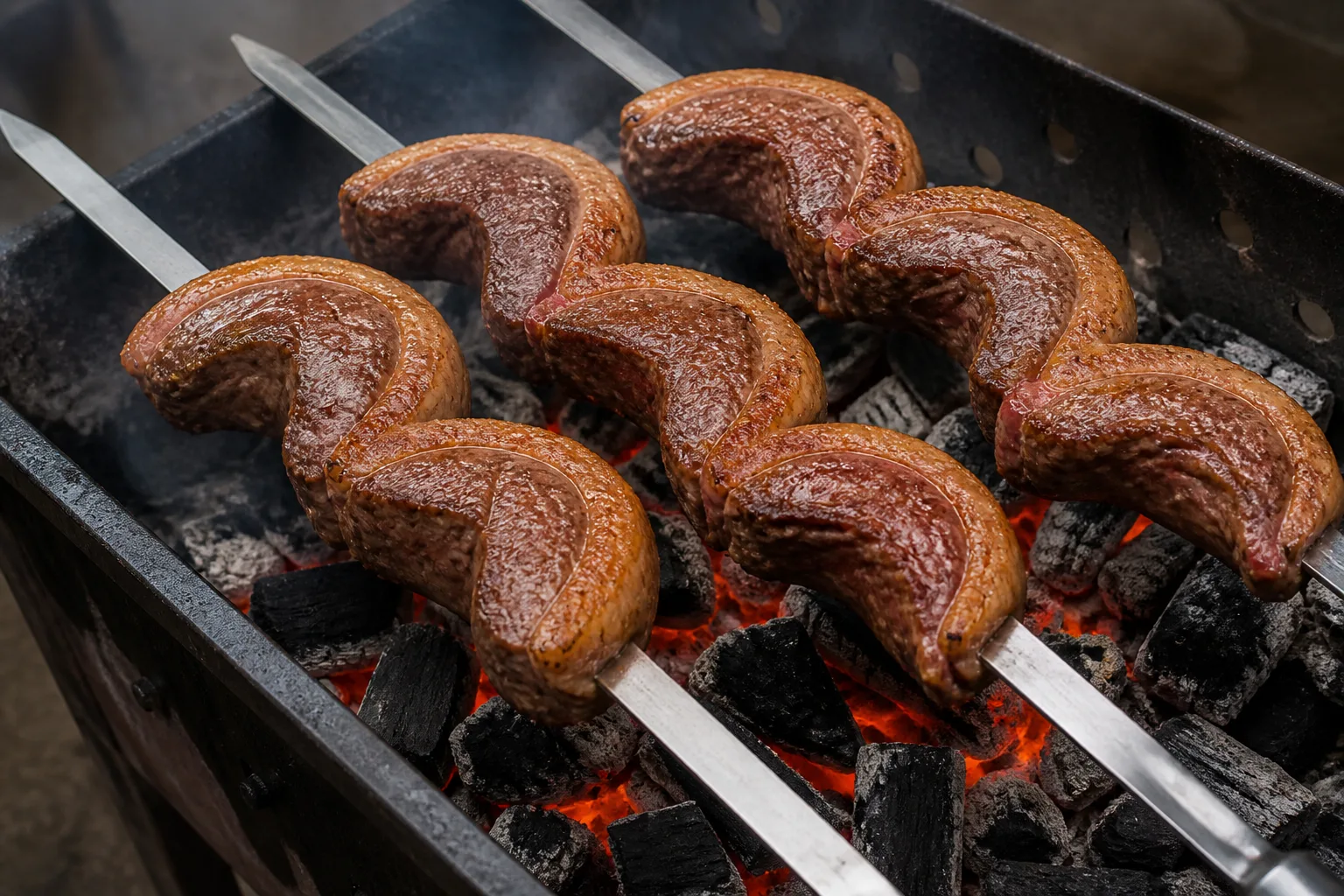
This is the version most people are chasing. Cut the whole muscle with the grain into strips two to three fingers wide. Bend each strip into a C with the fat on the outside curve, and run the skewer through both ends so it holds that shape.
Salt it heavily with coarse salt and nothing else. Over hot coals, fat side down first, until the outer layer is browned and crisp. Then carve that outer layer off, eat it, and put the skewer back over the fire for the next round. That is the whole method, and it is why a rodizio never stops serving.
As steaks
Cut across the grain into steaks about an inch and a half thick. Score the fat cap in a crosshatch, cutting into the fat but not the meat. Start them fat side down over indirect heat or in a cold pan and let that cap render out slowly, which takes longer than you expect. Once it is golden, move them over direct heat and sear both faces hard.
Pull at 130°F for medium rare and rest them ten minutes. Picanha keeps climbing after it comes off, more than most steaks, because the fat cap holds heat.
Whole, as a roast
Score the cap, salt it a day ahead if you can, and run it at 275°F over indirect heat, fat side up, until the center reads 125°F. Then sear it hard, fat side down, to finish. Rest it, then slice against the grain.
Whichever way you go, salt is doing most of the seasoning work here, and doing it early is what separates a good result from a grey one. Our five secrets to perfectly seasoned meat covers the timing, and if you are cooking it over wood, our pit master notes go deeper on managing a live fire.
Where to Get Picanha in Atlanta
Most searches for picanha near me end at a steakhouse. You do not need one. It is a cut, it is in our case, and it costs a fraction of what the same muscle costs sliced onto a plate downtown.
We are at 2030 Main Street NW in Riverside, open Mon–Fri 11am–7pm, Sat 10am–7pm, Sun 10am–5pm. Picanha runs two to three pounds a piece and is sold by the pound, so tell us how many people you are feeding rather than how many pounds you want. You can order online for pickup and have it trimmed the way you want when you arrive.
Cooking for a crowd instead of a grill? Our catering menu runs off the same case. If you want a specific weight set aside, or you want it broken down a particular way, get in touch or call the shop and ask for the butcher counter. There is more behind the counter on the butcher blog.
Frequently Asked Questions
What cut of beef is picanha?
Picanha is the top sirloin cap, sold in the United States as sirloin cap or coulotte. It is a single triangular muscle from the top of the rump, and the difference between picanha and coulotte is usually just whether the fat cap was left on.
How much picanha do you need per person?
Half a pound per person raw is a safe number, so a whole two to three pound picanha feeds four to six. It is rich, and the fat cap means you lose less weight to the fire than you would with a leaner roast.
Do you cook picanha with the fat cap on?
Yes, always. The cap bastes the meat while it renders and crisps into the best part of the cut. Score it in a crosshatch so it renders evenly, and start it fat side down so it has time to give up before the meat overcooks.
Can Frazie's cut picanha to order?
Yes. Tell us whether you want it whole, cut into steaks, or cut into strips for skewers, and we will break it down that way and leave the cap on. We can also trim the cap thinner if you prefer, though we will try to talk you out of it.