
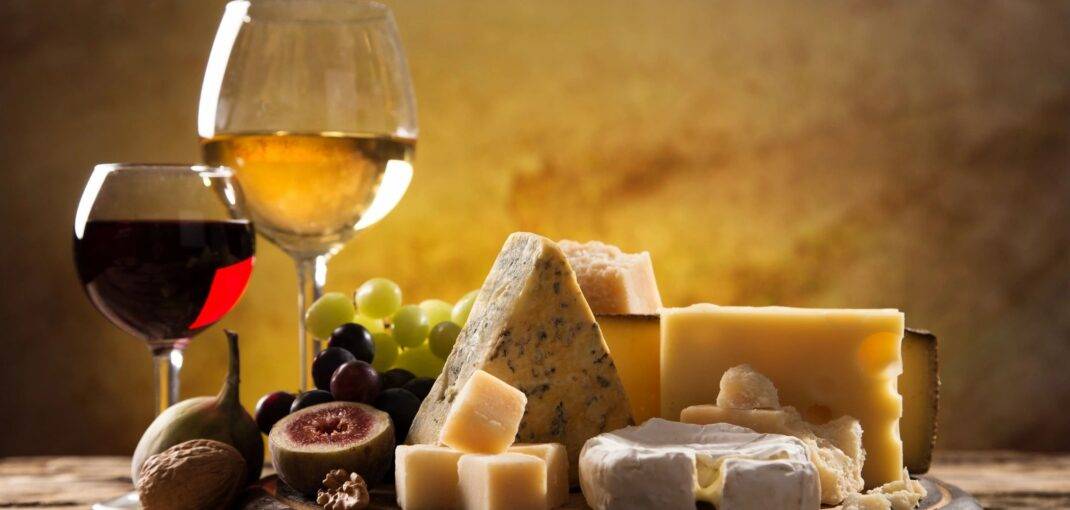
A charcuterie board is one of the few things you can put in front of people that needs no cooking at all and still looks like you tried. The whole skill is in what you choose and how you lay it out.
How Much to Buy
Work it out per person before you go shopping, or you will either run out or spend a fortune.
- As a starter, before a meal: about 2 to 3 ounces of meat and 2 ounces of cheese a head.
- As the meal itself: 4 to 5 ounces of meat and 3 to 4 of cheese.
- Three meats and three cheeses is plenty for most boards. More than that and nobody remembers any of it.
Choosing the Meats
Aim for contrast in texture and intensity rather than a shelf of similar things.
- Prosciutto. Thinly sliced dry-cured ham, delicate and salty. Drape it rather than folding it flat.
- Salami. Firm and fatty, mild through to hot. One is usually enough.
- Bresaola. Air-dried salted beef, lean and mineral, and a good counterweight to the richer things.
- Chorizo. Smoky and paprika-heavy, for a bolder board.
- Pâté or rillettes. Something spreadable gives people a third texture to work with.
Take the meat out of the fridge twenty minutes or so before serving. Cured meat tastes of very little straight from the cold.
What Goes Around It
- Cheese: something soft, something hard, something blue is a reliable trio.
- Bread and crackers: keep them plain. The board is already busy.
- Fruit and nuts: grapes, figs or sliced apple for sweetness, almonds or walnuts for crunch.
- Pickles and olives. The most important part, and the one people forget. Acid cuts the fat and keeps the board eatable past the first few bites.
- Mustard, honey or jam, in small bowls.
Laying It Out
- Place the bowls first, then the cheese, then fill the gaps with meat and everything else. Working the other way round leaves you nowhere to put the bowls.
- Give each meat its own area rather than scattering it about. People should be able to tell what they are picking up.
- Leave a little board showing. A completely covered surface reads as cluttered rather than generous.
- Use height. Bowls, folded slices and a small stack of crackers stop it looking flat.
Building for the Season
In summer, lean on fresh fruit, lighter cured meats and a chilled white. In autumn and winter, go heavier: spiced nuts, roasted squash, a firmer cheese and something red to drink. We run seasonal specials, so it is worth asking what has just come in.
Building Yours at the Counter
We keep a curated selection of charcuterie alongside the butcher counter, from the traditional staples to less usual things, and the team will happily talk you through what goes with what. Tell us how many people you are feeding and we can weigh it out for you.
If the board is for a party rather than an evening in, our catering menu covers larger platters, and our wine pairing guide will help you work out what to pour alongside it.