

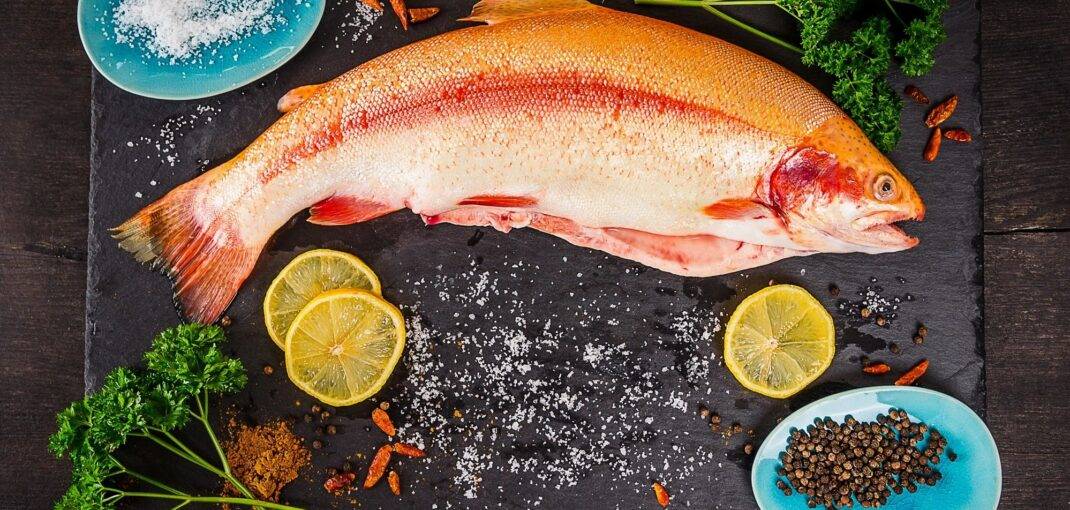
Atlanta is a long way from the coast, which makes where you buy your seafood matter more rather than less. Here is how to judge it, what to ask us at the counter, and how to cook it once you get it home.
How to Tell Whether Seafood Is Fresh
You can do most of this yourself, standing at the case.
- Smell. It should smell clean and briny, like sea air. A strong fishy or ammoniac smell means it is past its best.
- Eyes, on a whole fish. Clear and slightly domed. Sunken and cloudy means it has been sitting.
- Flesh. Firm, and it should spring back when you press it. If your finger leaves a dent, choose something else.
- Gills. Bright red or pink. Brown or grey is a bad sign.
- Live shellfish. Clams and mussels should close when you tap them. Throw away any that stay open.
What to Ask at the Counter
The most useful question is also the simplest: what came in today? Ask whether something was previously frozen, which is not a mark against it. Fish frozen properly on the boat is often in better condition than fish that travelled fresh. And ask us to do the work: scaling, gutting, filleting, pin-boning and portioning are all part of the job, the same as any other custom cut.
Getting It Home
- Cook it the day you buy it where you can. Two days is the practical limit for most fish.
- Keep it in the coldest part of the fridge, at the back and on the bottom shelf, on ice if you have it.
- Freezing works, but wrap it tightly and use it within a few months. Thaw it in the fridge overnight rather than on the counter.
- Keep raw seafood away from anything you are not going to cook. The same rules as any other raw protein, covered in our guide to storing meat properly.
Cooking It Simply
Good seafood needs very little done to it. Heat, fat, salt, acid.
- Thick fillets such as salmon or grouper: a hot pan, skin side down, and leave it there for most of the cooking. Turn it once at the end.
- Thin fillets such as sole or flounder: a minute or two a side, and no longer.
- Shrimp tell you when they are done. They curl into a C. An O means they are overcooked.
- Clams and mussels: steam them until they open, then stop. Discard any that stay shut.
The most common mistake is simply cooking it too long. Pull it a moment before you think it is ready and let the carryover heat finish the job.
What to Drink With It
Crisp, high-acid whites do most of the work: something dry and unoaked with shellfish, a fuller white or even a light red with salmon and other oily fish. We keep wine and beer in the shop alongside the counter, and there is more in our wine pairing guide.
Feeding a Crowd
Seafood scales well for a party because most of it cooks in minutes. If you would rather not cook at all, our catering menu covers platters and trays, or call the shop on 404-941-9171 and we will sort something out with you.
Come and See What Came In
What is in the case changes with the week, so the honest answer to what we have is always: come and look. We are at 2030 Main Street NW in Riverside. Our hours and directions are on the contact page.